


Explore Your
Creative Side
Project Overview
My team looked into local initiatives that we could help redesign. By chance, we stumbled upon ocarts.org. The premise of this website is to promote art education, classes, and art related events. We collectively had an interest and passion for the arts and wanted to bring more awareness. Therefore, we felt like it would be a suitable starting point for our project. There was some confusion with the website because there was an entirely separate website for their events, SparksOC.org. The structure was relatively decent and contained good content. However, navigation and filters could be improved upon to be more streamlined and smooth.
Design Challenge
With the advancement of technology, people have opted to stay in the convenience of their homes. They mainly engage in home entertainment like Netflix, Youtube, or video games.
The problem is that these art related events often have low turnout. The challenge is that people have little interest or are unaware that these events are occurring or to find them. An opportunity we found was that people like to hang out with friends and socialize. It was the perfect opening for our project. Our project would be mutually beneficial to users and organizations.
Competitive Analysis
Prior to researching about our potential users, we wanted to look at the current market. We collected valuable data from our competitive and SWOT analysis. We looked for features we wanted to incorporate and weaknesses/gaps we made sure to be cognizant of.


User Interviews
We wanted to know if people would be willing to attend these events and what motivates and deters people from attending. What motivates users to attend local arts events?
Goal: Discover what factors prevent people from attending local art events and what would persuade them to go to an event
People tend not to go out of their way for arts events but enjoy unique experiences with friends. Users need up to date information on events and incentives for attending arts events.

"Staying at home is more of a risk. When you go to an event, you went outside and explore something new"

"If it's irrelevant to me, then I would never go back (to the event)"
• People need to have some type personal connection to the event whether it's general interest in the event or by going with friends/family
• People prefer not exerting too much effort or going out of their way. Convenience is a determining factor
• There is a lack of awareness of these events. People have to know about it or hear it from someone they know
• People enjoy socializing and experiencing new things. This creates a sense of community.
Findings


THE PROBLEM
Users don’t often attend local arts events because they don’t have a streamlined tool to find events that suit their interests, making staying at home more convenient. Users enjoy going out with loved ones, but aren’t aware of events they can invite friends to.
THE SOLUTION
An app that helps users search for events, suggest events for users based on their personal interests and allows them to share interesting events with loved ones. A paired “rewards” feature to give users incentive to attend more events.

Feature Prioritization
Continuing our process, we defined certain features we wanted to implemented into the redesign. We plotted it on a chart to see where we wanted to direct our efforts. The High Cost/ High Impact quarter is a result of our findings.

User Flow
Our team discussed the main user flows that we wanted to build for our users. We wanted to ensure the process was clear and straightforward. After our discussion, we concluded that we would want our participants to mainlybe able to find an event and invite a friend (to the event).

User Persona

Storyboard

Sketches/Wireframes


Brand Identity
The selected colors were aimed to portray a sense of elegance and sophistication. We wanted to keep it simple and minimal. The challenge was to have the website be not too dull. This was combated by having hints of color in our iconography.


User Testing
In regards to user testing, our team wanted to get insight if our design was intuitive and user friendly. Additionally, we wanted to get feedback as to on what improvements could be made.
Goal: Search for an event to attend, invite a friend, and claim a reward

Within our research, we noticed that there was confusion the names of our navigation bar. Our users could not find the correct tab to complete the task at hand. The main goal was to easily search for an event. We initially named the search page "Home" on our navigation bar but our users got confused. It made more sense to be called "Search" because this was the page where users to look up actual events. This tremendously made it more clear to understand.
Following, the events were laid out long ways to fit more listings on the page. We thought this could give more exposure to events. However, our users enjoyed looking at visuals more so than reading. As a result, our team to redesign it to be cards instead. Finally, under "My Events" was supposed to show tickets that had been purchased. Users would be able to easily access their ticket there. There was also a place to claim reward. It was unclear if it was clickable. There was no differentiation visually to determine whether it could be clicked on. In the end, we made it into a button. These modifications made our prototype more smooth.

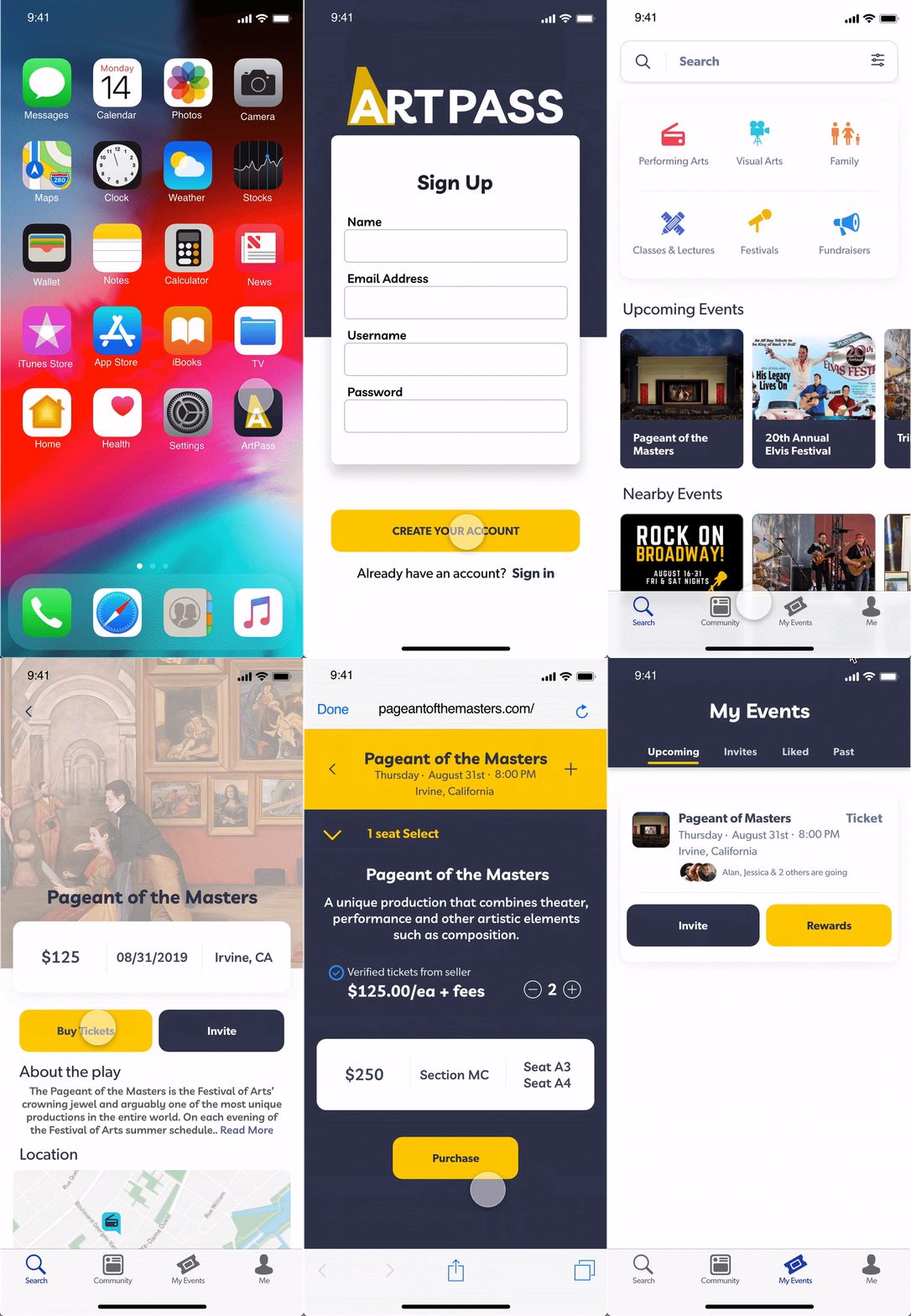
Check out the prototype
Next Steps & Further Development
As my team wrapped up on ArtPass, we discussed future plans for our application. Firstly, we would expand upon the pages to make it fully functioning. Key features would be added to make our app more competitive such as more rewards or a credit usage program. We feel that this would differentiate ArtPass in the current market. Additional animations would be incorporated to create a more entertaining experience. Our prototype mainly focused on one user flow. We want our users to be to get a real feeling of using the app. Continuous testing would be implemented to achieve the best version possible. Additionally, we would continue designing the website to mirror the same experience on mobile.
• Expand user base
• Develop the rest of the website for user testing
• Expand on app features such as a rewards/credit program